
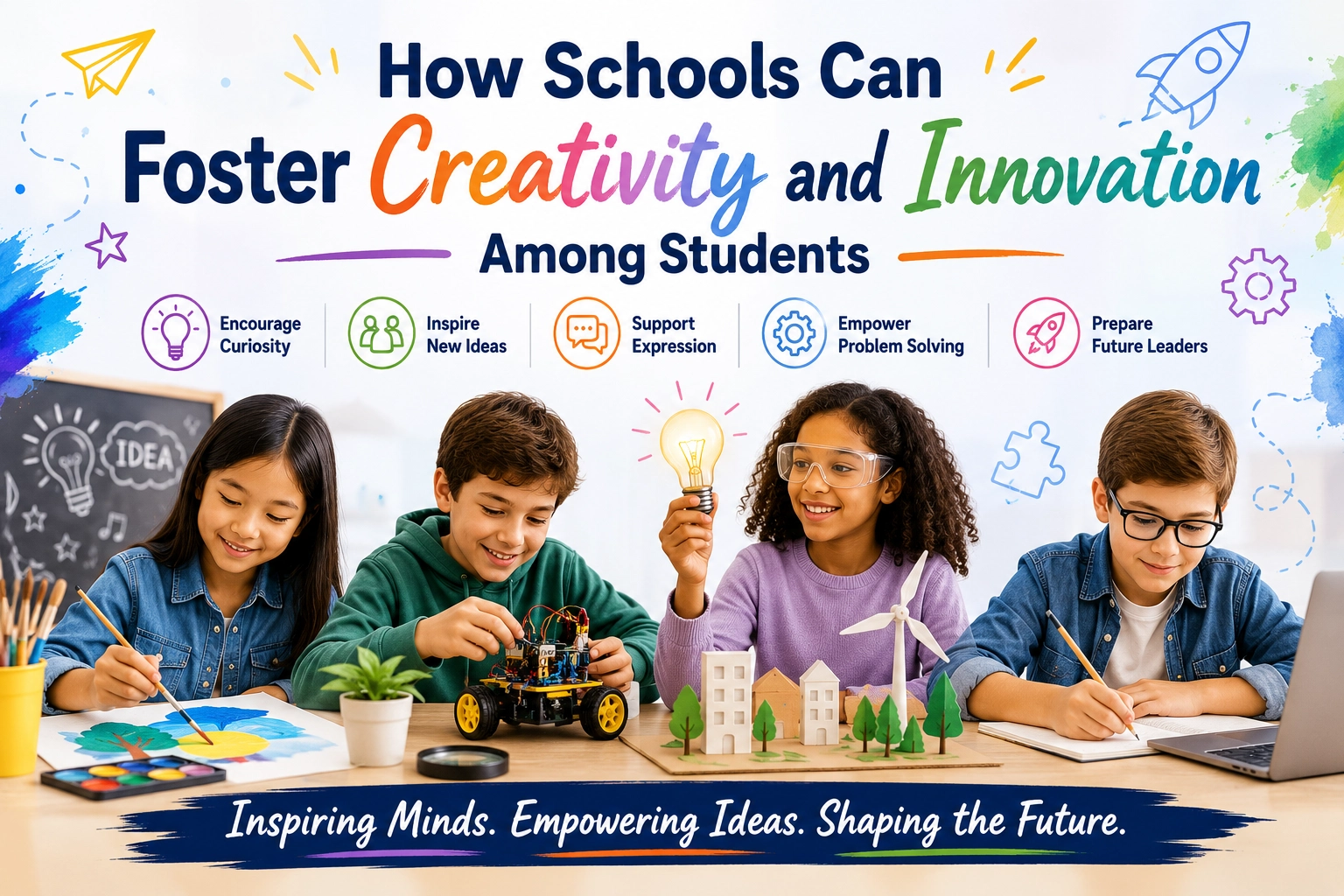
In 1968, George Land and Beth Jarman administered a creativity test to 1,600 children aged three to five years. They found that 98% of the children scored at the ‘genius’ level for creative thinking. The same test was administered to the same children at ten years of age — and the proportion scoring at genius level had dropped to 30%. By fifteen, it had fallen to 12%. When the same test was administered to 200,000 adults, only 2% scored at the genius level.
What happens between early childhood and adulthood that so dramatically suppresses one of the most naturally abundant human capacities? A significant part of the answer, Land and Jarman concluded, is schooling — or more precisely, a style of schooling that systematically trains convergent thinking (finding the single correct answer) at the expense of divergent thinking (generating many possible answers, possibilities, and approaches).
This is not an argument against academic rigour or structured knowledge. It is an argument for the kind of school environment that cultivates both — that develops the disciplined thinking that academic subjects require alongside the generative, boundary-pushing thinking that creativity and innovation demand.
What Creativity and Innovation Actually Mean in an Educational Context
Before schools can effectively foster creativity, it helps to be precise about what creativity actually is in a school context — because it is frequently misunderstood in ways that make it harder to cultivate deliberately.
Creativity is not the same as artistic talent. A student who designs an elegant proof in mathematics is being creative. A student who finds a novel solution to a programming problem is being creative. A student who interprets a historical event through an unexpected but well-supported analytical lens is being creative. Creativity is present wherever a student generates something that is both original and valuable — in any subject, at any level.
Innovation is closely related but distinct: it is creativity applied to the solution of real problems. An innovative student does not just generate novel ideas — they develop and implement those ideas in ways that produce change or improvement. Both qualities are teachable, and both are increasingly essential in the world students are preparing to inhabit.
Why Creativity and Innovation Matter More Than Ever
The World Economic Forum’s Future of Jobs Report consistently places creativity, critical thinking, and innovation among the top skills required across industries for the coming decade. This is not because employers have become more culturally enlightened. It is because the nature of work has shifted in ways that make these qualities genuinely necessary.
Routine cognitive tasks — the kind that can be precisely specified and consistently repeated — are increasingly performed by automation. The tasks that remain for human workers are disproportionately those that require judgment, adaptability, and the generation of novel approaches to complex, ill-defined problems. These are, precisely, the tasks that creativity and innovation enable.
Students who leave school with strong academic knowledge but limited creative and innovative capacity are less well-equipped for this reality than those whose education has developed both. Schools that recognise this are not compromising on academic standards — they are expanding their definition of what it means to prepare students well.
The Conditions That Creativity Requires
Creativity does not emerge in any environment. It requires specific conditions — psychological, social, and structural — that schools can deliberately create or inadvertently suppress.
Psychological Safety
The single most important condition for creative thinking is the psychological safety to be wrong without significant social or academic cost. Creative thinking requires taking intellectual risks — proposing ideas that might not work, combining concepts in ways that might seem strange, exploring possibilities that might turn out to be dead ends. In environments where being wrong is embarrassing, students rapidly learn to stay safely within established answers rather than venturing into genuine territory.
Building psychological safety in a classroom requires consistent, active effort from teachers: modelling intellectual risk-taking themselves, responding to wrong answers with curiosity rather than correction, explicitly celebrating the questions and ideas that do not yet have clear answers, and designing assessment practices that reward reasoning and originality alongside accuracy.
Time and Space for Deep Work
Creativity cannot be scheduled into 45-minute blocks between other activities. It requires sustained engagement with a problem or challenge — time for ideas to develop, be discarded, be revised, and gradually take shape. Schools that structure every moment of the day around transmission of predetermined content leave no space for the slow, nonlinear process through which genuine creative work develops.
The most creativity-supporting schools build extended project time, open-ended investigation periods, and student-directed inquiry into their regular timetables — not as occasional events, but as consistent structural features of the learning experience.
Genuine Problems Worth Solving
Creativity is most powerfully activated by genuine problems — challenges that matter, that do not have predetermined solutions, and where the student’s contribution can make a real difference. Tasks that simulate real problems but are in fact entirely predetermined in their outcomes do not produce the same quality of creative engagement.
Schools that connect student learning to real community challenges, genuine scientific questions, authentic design problems, and actual creative briefs — rather than always working within pre-solved examples — develop creative capacity far more effectively than those that treat creativity as a subject to be taught through exercises.
Families in Bengaluru who are specifically seeking schools where creativity and innovation are core educational values — not just language in the school prospectus — will find that best ICSE schools in Bangalore with demonstrated project-based learning, student exhibition programmes, and genuine maker or innovation spaces are the institutions most consistently associated with graduates who are both academically strong and genuinely creative thinkers.
Practical Strategies Schools Can Use to Foster Creativity
Project-Based Learning
Project-based learning (PBL) is one of the most thoroughly researched pedagogical approaches for developing creativity and innovation alongside academic content. In well-designed PBL, students work over an extended period on a complex, real-world challenge — developing, testing, and refining their approach in response to what they discover along the way.
The key features of effective PBL that support creativity include: student voice and choice in how they approach the challenge; sustained inquiry over time; opportunities to receive and incorporate feedback; connection to an authentic audience or purpose; and structured reflection on the process as well as the product.
Design Thinking as a Classroom Framework
Design thinking — the problem-solving process used by product designers, engineers, and innovators — translates remarkably well into educational settings. Its five stages (empathise, define, ideate, prototype, test) provide a structured framework for creative problem-solving that is both rigorous and generative.
Schools that introduce design thinking as a cross-curricular framework give students a reusable creative process they can apply independently across any domain. Students who have practised design thinking in a technology project are better equipped to apply the same approach to a social challenge, a humanities inquiry, or a personal decision.
Making Failure a Learning Tool
Innovation is inherently iterative. Virtually every significant innovation in human history went through multiple rounds of failure before arriving at a successful form. Schools that treat failure as information rather than verdict — that build prototyping, testing, and revision into the learning process as expected and valued steps — normalise the iterative relationship between failure and progress that creative work requires.
This means explicitly teaching students to ask ‘What did I learn from this not working?’ rather than treating an unsuccessful attempt as simply wrong. It means designing assessment frameworks that credit effort, revision, and growth alongside final outcomes. And it means ensuring that the teacher’s response to student failure consistently communicates ‘interesting — what does this tell you?’ rather than ‘incorrect.’
The schools of Bangalore that have earned recognition for developing genuinely creative and innovative graduates are consistently those where the approach to failure is visible and deliberate — where student work-in-progress is displayed alongside finished products, where revision histories are valued, and where the story of how an idea developed is considered as important as the idea itself.
Cross-Curricular Connections
Some of the most powerful creative thinking happens at the boundaries between subjects — in the space where a scientific principle illuminates a historical event, where a mathematical structure turns out to explain a musical pattern, where a geographic understanding reshapes an economic analysis. Schools that structure learning in ways that allow these connections to emerge — through integrated projects, cross-departmental collaboration, and explicitly interdisciplinary units — provide unusually rich conditions for creative thinking.
Students who have been encouraged to think across subject boundaries develop a more flexible, connected understanding of knowledge that is itself a significant creative asset.
Student Leadership of Learning
One of the most powerful signals a school can send about the value of student creativity is giving students genuine leadership over aspects of their own learning. This might take the form of student-designed projects, student-curated exhibitions of learning, student-led conferences where learners present and explain their own work to parents and peers, or student input into the design of assessments and learning activities.
Students who experience genuine agency in their learning — who know that their approach to a problem matters, that their interpretation is worth developing, that their creative contribution has a real audience — are far more likely to invest creative effort in their work than those who experience school as a place where the right answers already exist and the task is simply to find them.
Parents evaluating ICSE schools in Bangalore for their children who want to understand the school’s genuine commitment to creativity should ask specifically about student-led learning opportunities, exhibition or showcase events where students present original work, and how the school’s assessment practices reward creative and independent thinking alongside factual accuracy.
The Teacher’s Role: Creating and Protecting Creative Culture
Schools do not become creative institutions through policy statements or mission documents. They become creative institutions through the daily choices of teachers — about how they respond to unexpected student ideas, how they design learning tasks, how they approach assessment, and whether they model the creative risk-taking they want students to demonstrate.
The teacher’s role in fostering creativity cannot be outsourced to a programme or a policy. It requires:
- Genuine intellectual curiosity about their own subject and beyond it.
- The professional confidence to allow learning to go in unexpected directions.
- Assessment literacy — the ability to design tasks and rubrics that genuinely reward creative thinking rather than simply reproducing it as a category while rewarding conventional performance.
- The willingness to be wrong in front of students — modelling that not-knowing is the beginning of learning, not its failure.
- Sustained, specific feedback that treats student creative work seriously rather than offering generic praise.
Schools that invest seriously in teacher professional development — particularly in pedagogical approaches that support creativity and innovation — are making a long-term investment in student outcomes that shows up in the quality of student work, the depth of student engagement, and the kinds of graduates the school produces. Among best schools in Bangalore, this investment in teacher development is one of the clearest markers of genuine institutional commitment to creativity, as opposed to its appearance.
Conclusion
Fostering creativity and innovation among students is not a soft educational priority competing with harder academic goals. It is a core educational responsibility that, when taken seriously, enhances academic performance, develops genuinely future-ready graduates, and produces young people who approach the world as participants rather than spectators.
The conditions required — psychological safety, time for deep work, genuine problems, and teachers who model intellectual risk-taking — are not expensive or exotic. They are cultural choices that any school can make, at any level, with any curriculum. The schools that make these choices consistently are the ones whose graduates are not just well-educated but genuinely equipped to contribute to the world they are entering.
Frequently Asked Questions
Q1. Can creativity be assessed fairly in school?
Yes — but it requires assessment design that goes beyond conventional right-or-wrong marking. Effective assessment of creative work evaluates the quality of the process (how did the student approach the problem?), the originality and appropriateness of the outcome (is it both novel and relevant?), and the student’s own reflective understanding of their creative choices. Rubrics that make these dimensions explicit allow teachers to assess creative work consistently and fairly, while communicating to students that creative thinking is genuinely valued.